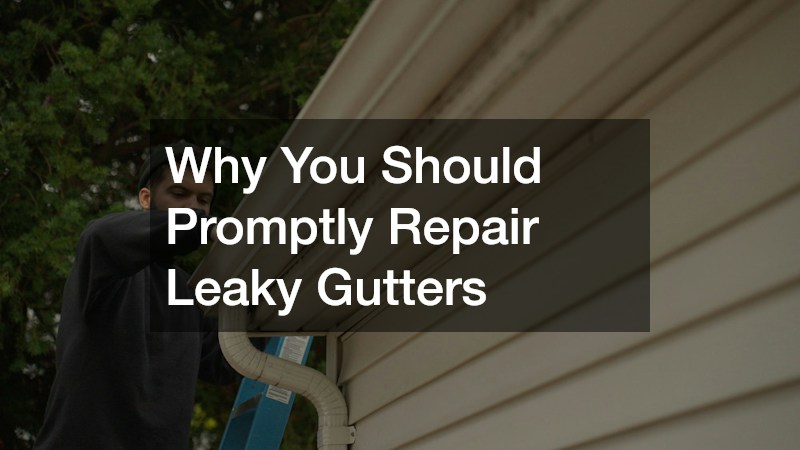

Gutters play a simple but important role in protecting a home. They collect rainwater from the roof and direct it away from siding, landscaping, walkways, and the foundation. When gutters begin leaking, separating, or overflowing, that water can end up exactly where homeowners do not want it.
Small gutter problems are easy to ignore because they may not seem urgent at first. However, delaying gutter repair can allow moisture damage to spread and potentially create much more expensive problems around the property. Addressing leaks early is usually easier than dealing with the damage they can cause over time.
Leaky Gutters Can Damage the Foundation
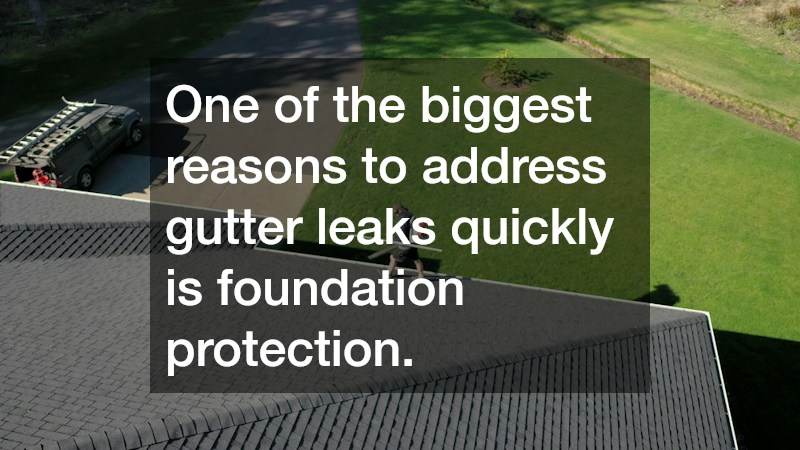
One of the biggest reasons to address gutter leaks quickly is foundation protection.
Gutters are designed to move water away from the base of the home. If water spills through a damaged seam or hole, it may collect near the foundation instead.
Repeated saturation can contribute to soil movement and moisture problems around the structure.
In some situations, water may also enter basements or crawl spaces.
Prompt gutter repair can help restore proper drainage before water repeatedly collects along the home.
Water Can Damage Siding
A leaking gutter can allow water to run directly down exterior walls.
Over time, this may stain siding or contribute to deterioration depending on the material.
Wood siding can be especially vulnerable to prolonged moisture exposure. Paint may peel, wood may begin to rot, and areas around trim can become damaged.
Even materials designed to withstand rain are not necessarily intended to have water constantly flowing across the same section.
Repairing the gutter helps redirect that water where it belongs.
Fascia Boards May Begin to Rot
Fascia boards run along the edge of the roof and often provide the surface where gutters are attached.
When gutters leak or overflow, the fascia behind them may remain wet for extended periods.
Repeated moisture exposure can cause wood fascia to soften or rot.
Once this happens, the gutter may begin pulling away because its attachment point is no longer strong enough.
What starts as a small leak can eventually require both gutter repair and replacement of damaged exterior wood.
Roof Edges Can Be Affected
Gutter problems can sometimes contribute to moisture issues near the roofline.
If gutters are clogged, improperly pitched, or damaged, water may overflow near shingles and roof edges instead of moving efficiently through the system.
This can expose nearby roofing components to additional moisture.
Homeowners who notice stains, rotting fascia, or water running behind the gutters should have the area inspected.
The gutter problem itself may be relatively straightforward to correct if it is addressed early.
Landscaping Can Wash Away
Landscaping is another common victim of leaking gutters.
Instead of flowing through a downspout, water may pour directly into flower beds or soil next to the house.
Heavy runoff can wash away mulch, erode soil, expose plant roots, and create muddy areas.
Repeated water impact can also damage delicate plants.
A small gutter repair can often prevent the same area from being flooded every time it rains.
For homeowners who have invested significantly in landscaping, repairing drainage problems can help protect that investment.
Leaks Can Create Walkway Hazards
Water leaking over a walkway, driveway, deck, or patio can create inconvenient and potentially hazardous conditions.
Standing water may make surfaces slippery during rain.
In colder climates, that moisture can freeze and create patches of ice around entrances or walkways.
Repeated runoff may also stain concrete or contribute to erosion around paved surfaces.
Redirecting the water through the gutter and downspout system can help keep high-traffic areas drier.
Small Leaks Can Grow Larger
A tiny hole or separated seam rarely fixes itself.
Temperature changes, debris, standing water, and repeated storms can gradually make the problem worse.
Fasteners may loosen, seams may separate further, and corroded areas can expand.
Handling gutter repair when the problem is small may require less work than waiting until an entire section is damaged.
Homeowners should pay attention to dripping seams, visible holes, sagging sections, or water appearing behind the gutter.
Sagging Gutters Need Attention
Gutters should maintain a slight slope so water flows toward the downspouts.
When sections sag, water can collect in low spots instead.
The extra weight of standing water and debris can put additional strain on hangers and fasteners.
Eventually, the gutter may pull farther away from the home.
Sagging can result from loose hardware, heavy debris, damaged fascia, or improper installation.
A professional can determine whether the section can be repositioned or whether additional components need replacement.
Clogs May Cause Leaks and Overflow
Sometimes the gutter itself is not damaged initially.
Leaves, twigs, roof granules, and other debris can block water flow.
When water cannot reach the downspout, it may overflow or force its way through weak seams.
Cleaning the gutter may solve part of the problem, but existing leaks may still require gutter repair.
Homeowners should keep gutters and downspouts clear so water can move through the system as intended.
Downspouts Are Part of the System
Repairing a leaking gutter is only effective if the downspouts are also working properly.
A clogged, disconnected, or poorly positioned downspout can cause water to back up into the gutter.
It may also release large amounts of water too close to the foundation.
During an inspection, check the full drainage path rather than focusing only on the visible leak.
Water should be able to travel from the roof, through the gutters and downspouts, and safely away from the structure.
Mold and Moisture Problems Can Develop
Persistent moisture around the exterior of a home can contribute to conditions that support mold or mildew growth.
This may occur on siding, fascia, soffits, or other damp surfaces.
If water reaches interior spaces, the problem can become more serious.
Promptly correcting the source of unwanted moisture is an important part of preventing repeated damage.
A leaking gutter may seem minor, but it can continuously introduce water to the same location whenever it rains.
Watch for Signs of Gutter Failure
Homeowners do not need to climb onto the roof to identify many common gutter problems.
During or shortly after rainfall, look for water dripping through seams, overflowing the sides, or running behind the gutter.
From the ground, you may also notice sagging sections, disconnected downspouts, peeling paint, staining, or erosion below a particular area.
These signs can indicate that gutter repair or cleaning is needed.
Avoid climbing ladders in wet or windy conditions to investigate a problem.
Repairs May Be Simpler Than Replacement
Not every gutter problem requires replacing the entire system.
Loose fasteners, small holes, separated joints, or individual damaged sections may sometimes be repairable.
However, gutters with widespread corrosion, extensive cracks, severe sagging, or repeated failures may be better candidates for replacement.
A professional can evaluate the overall condition and explain whether localized repairs are likely to provide a lasting solution.
Regular Maintenance Can Prevent Future Problems
Cleaning and inspecting gutters periodically can help catch issues before they become severe.
Remove debris, confirm that downspouts are flowing freely, and look for areas where water is not draining correctly.
Trees close to the roof may increase the amount of leaves and debris entering the system.
Routine maintenance also gives homeowners a chance to spot loose hardware, developing leaks, and other problems early.
Do Not Wait for Visible Interior Damage
A gutter leak does not need to cause water stains inside the home before it deserves attention.
By the time moisture becomes visible indoors, exterior materials may already have been exposed repeatedly.
Prompt gutter repair can help protect the foundation, siding, fascia, landscaping, walkways, and roof edges from unnecessary water exposure.
The gutter system is one of the home’s primary drainage tools. Keeping it in good condition can prevent a relatively minor leak from becoming a much larger home maintenance problem.
About the Author